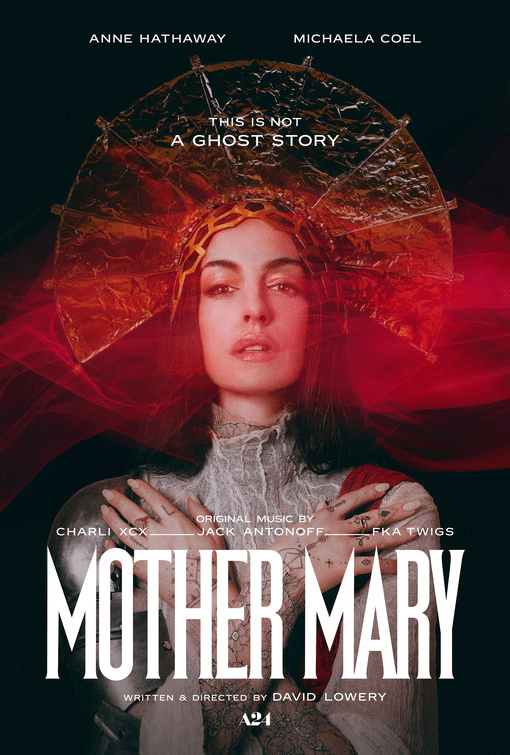
There are films that tell stories.
Then there are films that function more like dreams, rituals, emotional transmissions, or psychic exorcisms.
Mother Mary belongs to the second category.
the film is not a psychological drama about a troubled pop star, but something far stranger: a cinematic ritual about fame, identity, trauma, creativity, worship, possession, and the slow destruction of the self beneath the machinery of public projection.
The film is not primarily concerned with realism or conventional plot logic. It operates through symbolism, fragmented memory, bodily expression, emotional atmosphere, surreal transitions, and religious imagery. In many ways, Mother Mary treats modern celebrity culture as a form of religion — complete with worship, sacrifice, sainthood, ritual suffering, ecstatic devotion, and spiritual disintegration.
That is precisely what makes the film interesting.
The Meaning of “Mother Mary”
The title immediately invokes the image of the Virgin Mary from Christianity: purity, motherhood, sacrifice, suffering, holiness, and transcendence.
But the film does not use the symbol in a traditional religious sense.
Instead, it transforms the modern celebrity into a sacred object.
Mother Mary is not merely a singer in the film. She is treated like an icon. Fans project meaning onto her. The media constructs myths around her. Her public image becomes larger than her actual self. She is expected to embody impossible emotional and spiritual ideals for millions of strangers.
This mirrors how celebrity culture increasingly functions in modern society.
In earlier civilizations, people projected transcendence onto saints, prophets, mythic heroes, gods, sacred relics, and divine archetypes. Today, many people project those same longings onto musicians, actors, influencers, athletes, and public personalities.
The celebrity becomes:
- a vessel for fantasy,
- a symbolic container for collective emotion,
- a mirror for mass desire,
- and sometimes even a substitute for spirituality itself.
The film understands this deeply.
It portrays fame not simply as popularity, but as symbolic possession.
The “Third Mary”
One of the most intriguing concepts in the film is the mysterious reference to the “third Mary.”
The movie never fully explains what this means. That ambiguity is intentional.
The “third Mary” appears to symbolize fragmented identity — the emergence of another layer of self beneath the public persona.
The film suggests that multiple versions of Mary exist simultaneously:
- the manufactured public icon,
- the wounded private human being,
- and the transformed or possessed entity emerging through trauma, projection, performance, and fame.
This is why the movie often feels ghostly.
Mary is haunted not necessarily by literal spirits, but by identity fragmentation itself. The self begins splitting under the pressure of performance, expectation, emotional exhaustion, and collective projection.
The “third Mary” can therefore be interpreted as:
- the buried authentic self,
- the traumatized subconscious,
- the artistic shadow,
- or the archetypal entity created by collective worship and media mythology.
The film refuses to settle on a single explanation because it wants the audience to experience instability directly.
Fame as Possession
One of the film’s most brilliant ideas is its treatment of creativity and fame as supernatural forces.
Not metaphorically.
Almost literally.
The movie repeatedly frames artistic performance as something invasive — as though the performer is channeling energies larger than themselves. Fame behaves like a living entity feeding upon identity. The audience consumes the celebrity emotionally while simultaneously constructing them into an impossible symbolic figure.
The result is a kind of modern possession.
The celebrity no longer fully belongs to themselves.
This idea becomes especially powerful during the now-famous barn dance sequence.
The Dance Without Music
The barn dance scene is one of the most disturbing and memorable sequences in recent cinema precisely because it abandons normal cinematic comfort.
There is no music guiding the viewer emotionally.
Only movement.
Only breath.
Only bodily intensity.
Without musical framing, the dance becomes raw psychological exposure. The body itself becomes language.
The scene resembles:
- trance rituals,
- possession ceremonies,
- ecstatic breakdowns,
- grief convulsions,
- nervous collapse,
- spiritual exorcism,
- or psychic release.
Mary appears simultaneously liberated and consumed.
The absence of music forces the audience into direct confrontation with emotional energy itself. We are no longer watching choreography for entertainment. We are witnessing physicalized inner collapse.
The body moves as though something trapped inside is trying to escape.
That is why many viewers described the scene as “possessed.”
The dance feels less like performance and more like psychic eruption.
Trauma and the Fragmented Self
Underneath the religious symbolism and surreal atmosphere, the film is fundamentally about trauma.
Trauma fractures identity.
People create masks to survive. Public personas become armor. Performance becomes protection. Eventually the constructed self becomes so dominant that the original self begins disappearing beneath it.
Mother Mary visualizes this process in almost supernatural terms.
The film suggests that modern fame accelerates dissociation:
- the public consumes an image,
- the performer maintains the image,
- the real self retreats inward,
- until identity itself becomes unstable.
This is why the movie constantly blurs:
- reality and performance,
- self and role,
- authenticity and construction,
- memory and hallucination.
The viewer experiences the same instability Mary experiences internally.
The Collective Archetype
One of the deepest insights of the film is its portrayal of celebrity as a modern archetypal force.
The film asks:
What happens when a human being becomes the object of mass emotional projection?
This resembles the way immense man-made archetypal forces accumulate within the collective subconscious field — similar to how Buddhists understand bodhisattvas as vast symbolic and psychic presences shaped through centuries of devotion, projection, ritual, emotion, and collective consciousness.
The film suggests that modern celebrity can function in a remarkably similar way.
A human figure gradually becomes transformed into an archetypal entity through the emotional energy of millions of minds.
The celebrity stops being merely a person.
They become a psychic container.
An emotional infrastructure.
A living symbolic machine.
That transformation is horrifying precisely because no ordinary human nervous system was built to sustain such pressure indefinitely.
The Modern Sacred
Perhaps the deepest insight of Mother Mary is that modern civilization never truly abandoned religion.
It merely relocated the sacred.
The sacred moved:
- from temples to stadiums,
- from saints to celebrities,
- from pilgrimage to fandom,
- from prayer to parasocial obsession,
- from worship of gods to worship of image and identity.
The film exposes this transformation with remarkable precision.
Mother Mary is simultaneously:
- human,
- idol,
- victim,
- goddess,
- product,
- and ghost.
That contradiction is the core of the film.
It understands that modern celebrity culture creates beings who are expected to transcend ordinary humanity while remaining emotionally consumable by millions of strangers.
No real person can survive that intact.
The Album: Desire, Suffering, and the Burning World
Looking closely at Mother Mary: Greatest Hits (2026), the album itself operates primarily on themes of obsession, worldly desire, emotional collapse, longing, ambition, and the crushing psychological weight of fame.
But viewed through a Dhamma lens, many tracks unexpectedly reveal profound resonance with the ancient Buddhist understanding of the traps of loka — the world — and the necessity of eventually leaving them behind.
“Cut Ties” — The Necessity of Renunciation
Among the album’s tracks, “Cut Ties” carries perhaps the strongest resonance with renunciation.
The lyrics declare:
“Had to cut ties. To be starlight.”
In the worldly sense, the protagonist seeks transformation into an idealized icon.
But structurally, the song mirrors the ancient recognition that liberation requires severance from entanglement.
True freedom cannot emerge while the citta remains chained to attachment, dependency, emotional possession, social expectation, and worldly craving.
The act of “cutting ties” echoes the essence of Brahmacariya — the deliberate withdrawal from worldly entanglement in order to transcend the structures that bind the mind to suffering.
Ironically, the song presents worldly ascent while simultaneously exposing the mechanism of renunciation itself.
“Burial” — The Reality of Collapse
The gothic undertones of “Burial” confront the inevitability of loss and dissolution:
“This black suit fits like a glove
I was born to be the widow of love”
The song captures the structural instability of worldly attachment.
Everything conditioned eventually collapses.
Relationships decay.
Beauty fades.
Emotional intensity burns itself out.
Identity fractures.
The world cannot provide permanent refuge because all conditioned structures remain subject to dissolution.
The song unconsciously reveals the same existential pressure that historically pushed countless seekers toward renunciation and spiritual withdrawal.
“Dark Cradle” and “Blue Flame” — Craving as Entrapment
“Dark Cradle” and “Blue Flame” descend directly into the machinery of obsession and craving.
The songs pulse with emotional intoxication, hunger, longing, self-destruction, and slow psychological combustion.
From a Dhamma perspective, they vividly illustrate rāga and moha — passion and delusion.
The “dark cradle” symbolizes the deceptive comfort of worldly existence itself. The world appears emotionally meaningful while simultaneously functioning as a structure of attachment and recurring distress.
The songs understand something deeply important:
the same forces that intoxicate consciousness also imprison it.
The “blue flame” burns beautifully.
But it still burns.
The Meaning of “The Dark Cradle”
The imagery of a “dark cradle” serves as a direct mirror to the traps of attachment (loka), the weight of the past, and the process of ultimate transformation:
- The Womb of Delusion: A cradle is traditionally a place of comfort, safety, and birth. But calling it a dark cradle transforms it into a symbol of a beautiful but blind entrapment. It represents the cozy, delusional structures (moha) we build for ourselves—whether that is the addictive high of global fame or a suffocating, codependent romantic obsession. It is a space where the ego feels secure but remains completely in the dark.
- The Space of the Exorcism: The “dark cradle” also describes Sam’s secluded, shadowy barn workshop where the climax takes place. It is the crucible where Mary is forced to look at her shadows, confront her past treatment of Sam, and physically pull the parasitic “Red Ghost” out of her chest.
- Rebirth Through Renunciation: To sing about leaving the dark cradle means acknowledging that the old loops of identity must die. By performing this song to her audience, Mary is publicly shedding the manufactured “Mother Mary” goddess persona. She is choosing to step out of the dark, cozy cage of worldly adoration to let her mind (citta) find real, unburdened clarity.
It’s a hauntingly beautiful track that perfectly wraps up the entire thematic weight of the movie.
“The Rungs of Your Ladder” — Leaving the Ladder Behind
The final cathartic song of the film, “The Rungs of Your Ladder,” functions as the conceptual and emotional center of the entire movie.
The ladder metaphor operates across multiple layers simultaneously.
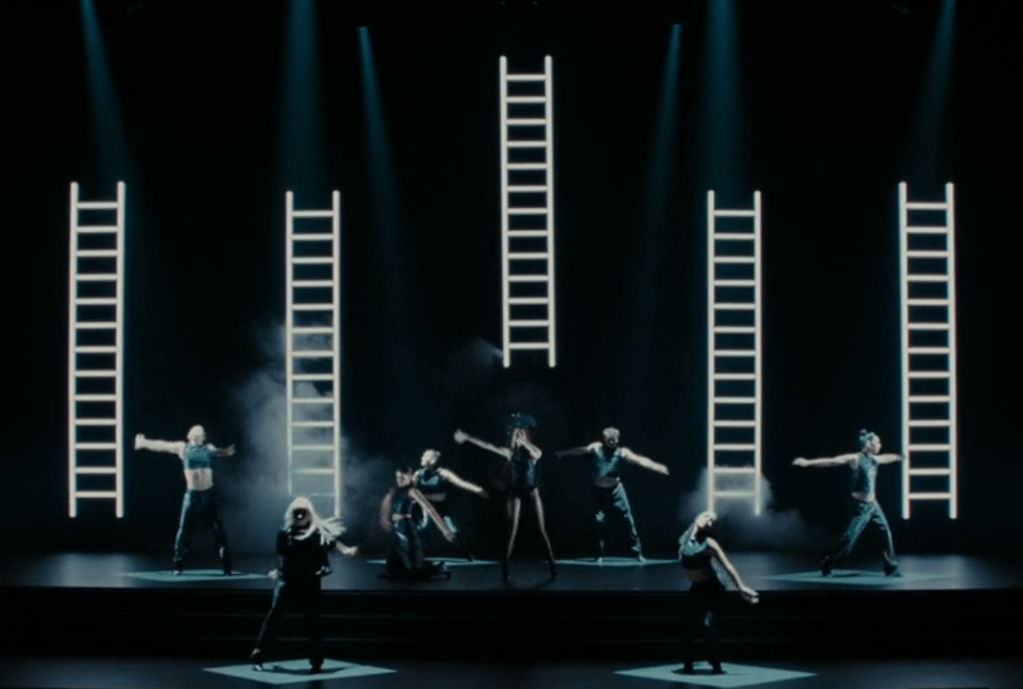
1. The Trap of Vertical Ascent
In celebrity culture, the ladder symbolizes upward ambition — the relentless climb toward symbolic godhood.
Earlier in the film, Mary catastrophically falls from impossible heights during a stadium performance after the support wires snap.
This moment reveals the truth of worldly ascent:
the higher the climb,
the more catastrophic the collapse.
The ladder is not liberation.
It is a cyclic trap.
Each rung climbed demands the sacrifice of another layer of authentic humanity.
2. Descending into Truth
To heal, Mary cannot continue climbing upward.
She must descend.
The ladder becomes a bridge downward into reality — back into emotional honesty, accountability, vulnerability, and buried trauma.
Each rung represents another layer of pride, delusion, image-management, and defensive identity that must be stripped away.
The descent becomes a form of exorcism.
3. Renunciation of the Ladder Itself
The most profound insight arrives at the end:
the ladder itself must eventually be abandoned.
A ladder belongs entirely to the world of conditioned striving.
It is a structure of becoming.
A mechanism of endless ascent.
But no worldly ladder can deliver true freedom.
Mary does not climb back to the throne of celebrity transcendence.
Instead, the final performance radiates exhaustion with the entire machinery of ambition itself.
She strips away the constructed “Mother Mary” identity.
She leaves the completed red dress behind.
She steps off the ladder entirely.
In Dhamma terms, the film unconsciously arrives at the threshold of nibbidā — disenchantment toward the burning loops of worldly becoming.
The film never fully articulates liberation in a transcendent sense.
But it powerfully recognizes the collapse of faith in the world’s promises.
And that recognition is spiritually significant.
A Horror Film About Symbolic Sacrifice
Ultimately, Mother Mary is not truly a movie about music.
Nor is it simply a film about celebrity.
It is a horror film about symbolic sacrifice in the age of media.
It portrays what happens when modern civilization turns human beings into archetypal consumption objects.
The celebrity becomes:
- emotionally consumed,
- spiritually fragmented,
- psychologically mythologized,
- and symbolically crucified by collective projection.
The terrifying brilliance of the film lies in the fact that it never fully separates fame from religion.
Because in the modern world, they increasingly function as the same system.
The sacred did not disappear.
It simply migrated into media.
And Mother Mary may be one of the first major films to expose that transformation with genuine psychological and symbolic depth.
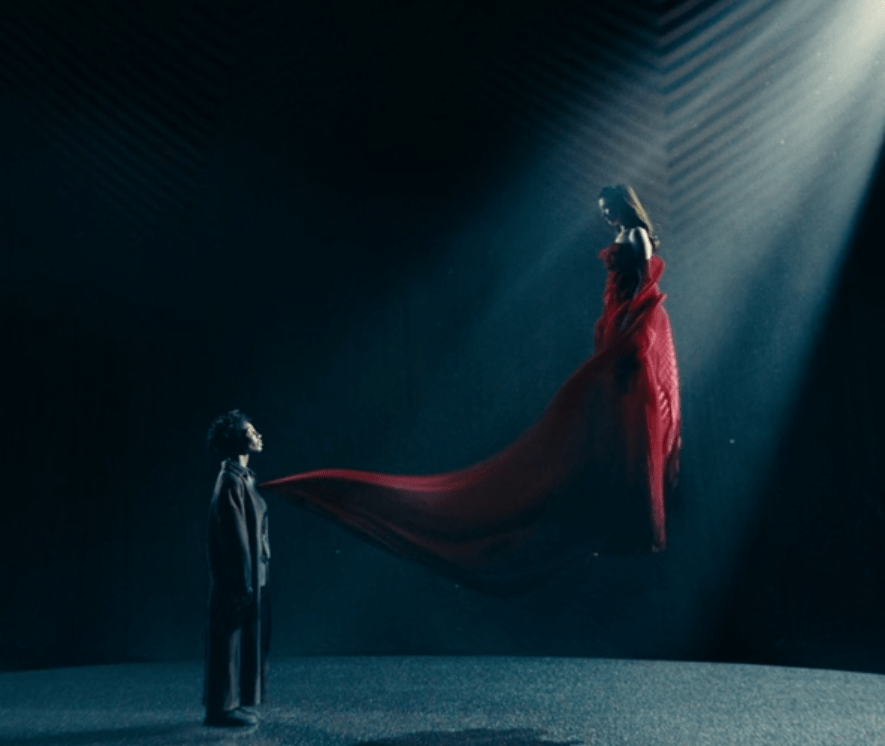
the red dress from the A24 film Mother Mary is a real, physical piece of haute couture—and its origin and meaning in the story are incredibly fascinating.
The dress used for Mother Mary (Anne Hathaway) final look is an actual creation by the acclaimed Dutch fashion designer Iris van Herpen. Director David Lowery and costume designer Bina Daigeler traveled to Amsterdam specifically to collaborate with van Herpen, selecting a symmetrical, deeply textured crimson gown that drapes and flows in waves around the body.
The dress acts as the ultimate physical symbol of leaving behind a heavy, manufactured persona to find authentic, personal clarity.
The Metaphor of the Red Fabric
Throughout the film, the color red represents a deeply heavy, spiritual, and psychological burden. It embodies the traps of the world—the obsessive, exhausting cycle of fame, codependency, and the mutual trauma shared between Mary and her former designer, Sam (Michaela Coel).
- The “Ghost” of Red Cloth: The surreal, supernatural element haunting both women is depicted literally as a billowing plume of red gossamer fabric that has trapped itself inside them.
- The Exorcism: In a dramatic, ritualistic climax, the women use dressmaking shears to pull this spectral red fabric directly out of Mary’s chest. It is a literal extraction of their painful past.
- The Rebirth: Sam takes that very same red fabric—the manifestation of their trauma—and drapes, pleats, and refashions it into a magnificent gown.
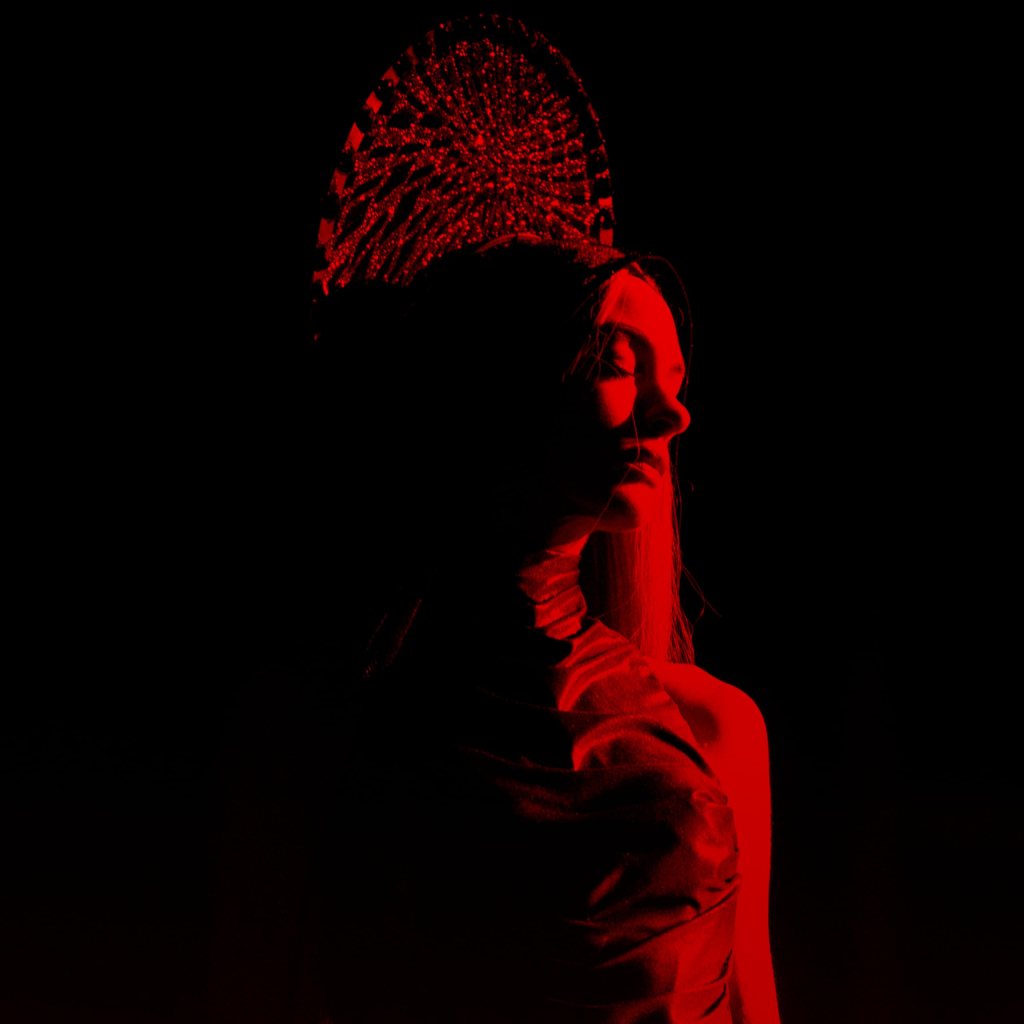
By turning the haunting red spirit into a work of art, the film illustrates the process of facing a psychological trap, stripping away its power, and transcending it. When Mary takes the stage, sheds her massive, overwhelming “halo” costume, and sings her song, she is finally leaving the worldly entrapments of her old persona behind.


Leave a comment